
Online Counseling for Kids: A Clear, Honest Guide
Searching for online help for your child's worries, confidence, or big feelings? Online support for kids works; the research is strong, and it removes the waitlists, travel, and cost that stop so many families. This guide explains what the options actually are, how to tell coaching from clinical therapy, and how to choose the right kind of help for your child.
2 minutes. No commitment.
 Loved by 20,000+ families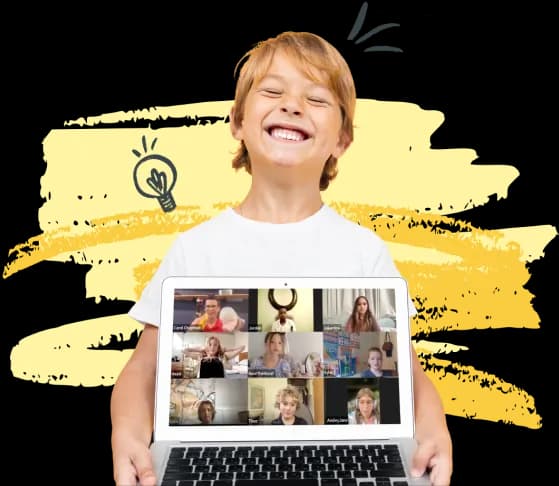
Why So Many Families Are Turning to Online Support
of kids who need care get specialty mental-health care
CDC, Children's Mental Health
of U.S. counties have no child psychiatrist
HRSA / AACAP workforce data
Typical wait for a child mental-health appointment
Children's Hospital Association; clinic survey data
as in-person therapy for youth anxiety, in studies
Journal of Clinical Child & Adolescent Psychology
What Online Counseling for Kids Actually Looks Like
"Online counseling for kids" is an umbrella phrase parents type when their child is struggling and they want help that fits real life. But it covers several very different things, and choosing well starts with knowing which one your child actually needs. Broadly, online support for children falls into three buckets, and they are not interchangeable.
Online clinical therapy and counseling
This is care delivered by a licensed clinical professional (a psychologist, licensed counselor, clinical social worker (LCSW/LMFT), or a child & adolescent psychiatrist) over secure video, often called telehealth or teletherapy. It involves assessment, diagnosis, and treatment of conditions like clinical anxiety, depression, ADHD, OCD, or trauma. Sessions are usually one-on-one (sometimes with a parent), and the clinician is licensed and regulated in your state. If a child needs a diagnosis, a treatment plan for a mental health condition, or medication, this is the lane.
Online coaching and skill-building (SEL)
This is structured, non-clinical support focused on building everyday emotional and social skills: naming and managing big feelings, calming the body, handling friendship conflict, trying brave things, bouncing back from setbacks. It is preventive and developmental rather than diagnostic. Good coaching draws on the same evidence-based principles clinicians use (like thought-reframing and gradual exposure) but delivers them as practice and habit-building, not treatment. tapouts lives here: small online group coaching that helps kids build skills before, alongside, or instead of clinical care, depending on what they need.
Apps, hotlines, and self-guided tools
Meditation and mood apps, parent-coaching platforms, and crisis lines all play a role. They are low-cost and immediate, but most are self-directed and lack a consistent human relationship: the single ingredient that research repeatedly ties to lasting change in children. They're best as a supplement, and in a crisis (see below) a hotline like 988 is the right first call, not an app.
Online support has quietly become one of the most powerful ways to reach kids who would otherwise go without help: no waitlist, no two-hour drive, no missed school. But "online" isn't a treatment by itself. The honest question for every family is which kind of support a child actually needs: skill-building they can start this week, clinical care from a licensed professional, or both at once. Matching the child to the right lane matters far more than the screen it's delivered on.
Dr. Maggie Vaughan
Licensed therapist & Head of Youth Transformation, tapouts
Why Online? The Access Barriers It Removes
Demand for children's mental health support has outpaced supply for years, to the point that the American Academy of Pediatrics and AACAP have called it a national emergency. Online delivery doesn't fix the shortage, but it dramatically widens the door, removing the practical barriers that stop most struggling kids from ever getting help.
Provider shortages and long waitlists
There simply aren't enough child specialists. HRSA workforce data and AACAP estimates put roughly 70% of U.S. counties without a single practicing child & adolescent psychiatrist, and projected demand is rising far faster than the workforce can grow. The result parents feel directly is the waitlist: historically around 7.5 weeks for a child psychiatry appointment, with median waits near 50 days and, in many cities, three months or more. Online support, especially coaching and group programs, can often start within days instead of seasons.
Geography, travel, and missed school
For families outside major metros, the nearest qualified provider can be an hour or more away, turning a 30-minute session into a half-day off school and work. Online support erases the commute entirely. A child can have their session from the kitchen table and be back to homework ten minutes later, which also makes it far easier to keep showing up consistently, the thing that actually drives progress.
Cost and stigma
In-person specialty sessions frequently run $150-300 each, and many private clinicians don't take insurance. Online formats, particularly group coaching, spread expert time across several families, lowering the cost per child substantially. Online delivery also softens stigma: there's no waiting room to be seen in, and for many kids the comfort of a familiar home environment lowers the anxiety of opening up in the first place.
Not Sure Whether Your Child Needs Coaching, Clinical Care, or Both?
Our free 2-minute assessment asks about what you're seeing at home and helps you understand where your child falls, and whether online group coaching is a good fit or whether you should start with a licensed clinician. No commitment, no pressure.
2 minutes. No commitment.
What Actually Helps: The Evidence Behind Online Support for Kids
Skepticism about a screen is fair, so it's worth knowing the research is genuinely strong. Across multiple studies, well-designed online support for children produces outcomes comparable to in-person care, provided the underlying method is sound and a real human relationship is at the center. Here's what the evidence actually points to.
Telehealth works about as well as in-person
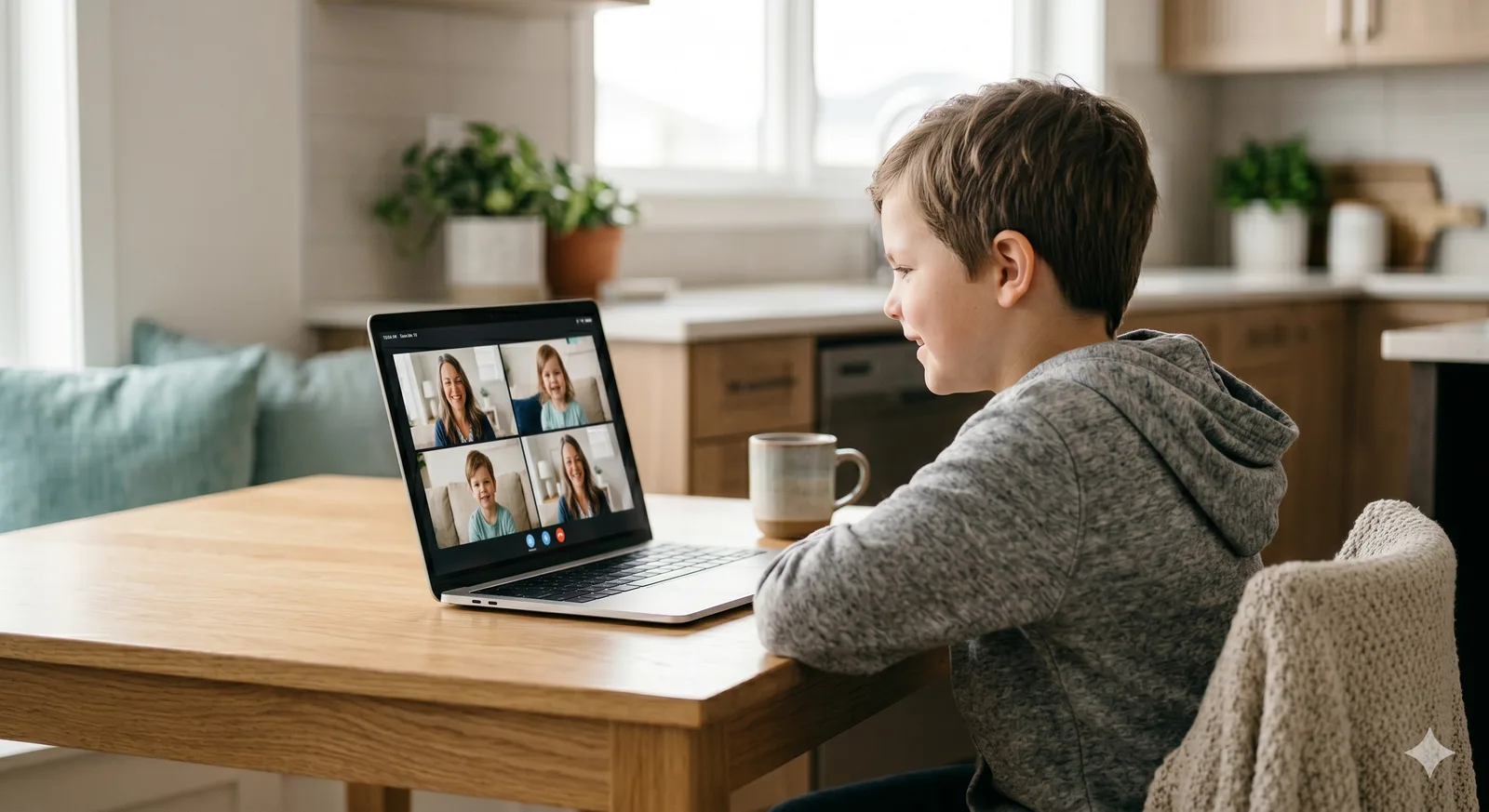
For the most common childhood concern, anxiety, controlled research published in the Journal of Clinical Child & Adolescent Psychology found that CBT delivered over video is similarly effective to CBT delivered in person. Reviews in the Journal of the American Academy of Child & Adolescent Psychiatry have likewise found virtual CBT effective for youth anxiety. The honest caveat: this is strongest for mild-to-moderate concerns. Very young children, severe symptoms, or complex needs may do better in person or with a blended approach, which is exactly the kind of judgment a licensed clinician should make.
Social-emotional learning has a deep evidence base
The skills under most childhood struggles (recognizing emotions, calming down, reading social cues, making good choices) are teachable, and teaching them works. The landmark meta-analysis by Durlak and colleagues (2011), published in Child Development, pooled 213 programs and more than 270,000 students and found SEL participants gained an average of 11 percentile points in academic achievement alongside meaningful improvements in emotional skills and behavior. CASEL organizes these into five core competencies (self-awareness, self-management, social awareness, relationship skills, and responsible decision-making) which form the backbone of any quality SEL program, including tapouts.
Gradual exposure beats avoidance
Avoidance is the engine of worry: the more a child dodges what scares them, the bigger the fear grows. The most reliable counter is gradual exposure: facing fears in small, planned, achievable steps so the child collects real evidence that they can cope. A child nervous about speaking up might answer one question to a trusted friend, then a small group, then the class. This works online just as well as in person, and group formats add a bonus: a built-in, low-stakes place to practice the brave step.
Peer learning and a consistent relationship
Two ingredients show up again and again in what works for kids: seeing a peer model a skill ("if they can do it, maybe I can too"), and a steady, trusted relationship with the adult guiding them. Group-based programs deliver both, and research finds them about as effective as one-on-one for many concerns, with the added payoff of real social-skills practice. The format matters less than the consistency: same people, same time, every week.
How tapouts' Online Group Coaching Works
tapouts is online small-group SEL coaching for kids ages 4-16, not clinical therapy. We take the evidence-based ingredients above (thought-reframing principles, SEL, gradual exposure, peer learning, a consistent coach) and deliver them in a format kids genuinely look forward to. For many families it's the right standalone support; for kids in clinical care, it's a powerful complement that turns skills into weekly practice.
Small online groups, matched carefully
Each group is just 4-6 kids, matched by age and challenge area, meeting over video. Your child isn't alone with their struggle; they're alongside peers who get it, which normalizes the experience and quietly dissolves the shame that so often surrounds big feelings.
Experienced coaches, background-checked
Every tapouts coach brings 20+ years in child development, education, or coaching and is background-checked. They're skilled at creating a warm, safe online space where kids feel comfortable taking emotional risks, and they know the difference between a child who needs encouragement and one who should be pointed toward clinical care.
Real skills, practiced then used
Sessions aren't lectures. Kids learn concrete tools (breathing techniques for overwhelm, thought-challenging scripts for bedtime worry, brave-step plans for school) and rehearse them in the group before carrying them into daily life. Skills are the point, and they transfer.
Game-based, so kids actually come back
The hardest part of helping a struggling child is consistent engagement. tapouts sessions run on games, challenges, and a points-and-prizes system that makes emotional learning feel like play. Kids want to return week after week, and consistency is what makes change stick.
Progress parents can see
You'll get regular updates on skills practiced and coach observations. Most families notice changes within 4-6 weeks (fewer meltdowns, more willingness to try new things, calmer responses to hard moments) so you're never guessing whether it's working.
Online Group Coaching vs. Traditional In-Person Counseling
| Other programs | tapouts | |
|---|---|---|
| What it is | Clinical therapy: assessment, diagnosis, treatment by a licensed professional | Non-clinical SEL coaching: building everyday emotional & social skills |
| Format | Usually 1-on-1, in an office | Small online group of 4-6 kids, from home |
| Access & wait | Often 7+ weeks, three months or more in many areas | Start within about 1-2 weeks |
| Geography | Limited by local providers; travel required | Available anywhere with a screen, no commute |
| Cost | $150-300 per session; often not covered | $39 per week ($159 every 4 weeks); first session free |
| Peer connection | None, one-on-one only | Kids learn from and support each other in real time |
| Best for | Diagnosable conditions, severe or complex needs, medication | Building skills & confidence; complement to clinical care |
The Research Behind Online Support
Research
CBT delivered via telehealth was found to be similarly efficacious to CBT delivered in person for youth with anxiety disorders, supporting online delivery as a credible option for the most common childhood concern.
Research
A meta-analysis of 213 social-emotional learning programs (270,034 students) found participants gained an average of 11 percentile points in academic achievement, with significant improvements in social-emotional skills, attitudes, and behavior.
Durlak, J. A. et al. (2011). Child Development, 82(1), 405-432
Research
Roughly 1 in 5 U.S. children has a mental, emotional, or behavioral concern, yet only about 20% of those children receive care from a specialized mental health provider, a gap that online access aims to narrow.
Centers for Disease Control and Prevention (CDC), Children's Mental Health
Research
Severe and persistent shortages of child & adolescent mental health professionals, with about 70% of U.S. counties lacking a child psychiatrist, leave many families without timely local specialty care, underscoring the need for accessible alternatives.
Coaching vs. Therapy: How to Choose, and When to Get Clinical Help
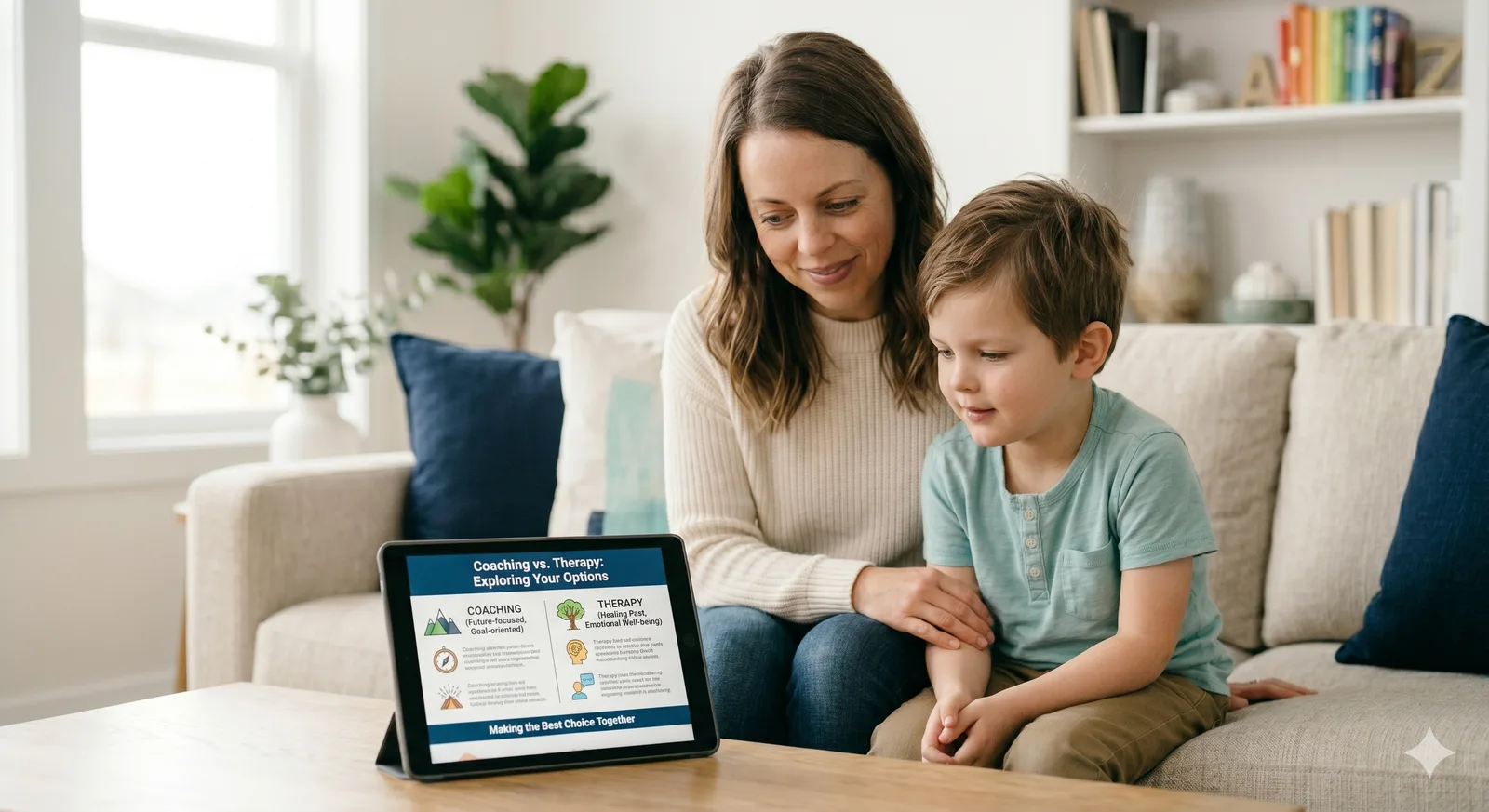
This is the most important section on the page, so we'll be direct. tapouts is coaching, not licensed clinical therapy or counseling. Coaching is a wonderful fit for a huge number of kids, and the wrong choice for some. Here's how to tell which your child needs, because getting this right matters more than anything else.
When online coaching is a great fit
Coaching shines when a child is fundamentally okay but struggling with everyday emotional and social challenges: worry that gets in the way, low confidence, frequent meltdowns, friendship trouble, perfectionism, shyness, big reactions to change, or simply needing better tools to handle hard feelings. If you want your child to build skills, practice them with peers, and grow more resilient (and there's no safety concern or diagnosable condition driving things) group SEL coaching is an excellent, accessible place to start.
When to see a licensed clinical professional instead (or as well)
Please seek a licensed clinician (a psychologist, licensed counselor, clinical social worker, or child & adolescent psychiatrist) if you see any of the following: persistent sadness, hopelessness, or loss of interest lasting two weeks or more; any self-harm, talk of death, or suicidal thoughts; a history of trauma or abuse; severe or worsening anxiety, OCD, or panic that derails daily life; significant changes in eating, sleeping, or weight; substance use; or a possible condition (such as ADHD, an eating disorder, or depression) that needs assessment, diagnosis, or medication. These need clinical care, and coaching is not a substitute for it. Many families do both: clinical treatment plus coaching for everyday skill practice between sessions.
If it's an emergency, act now
If your child is in immediate danger or talking about suicide or self-harm, this is not a moment for any online program or app. In the U.S., call or text 988 (the Suicide & Crisis Lifeline) right away, or call 911 or go to your nearest emergency room. AACAP is clear that any child with suicidal thoughts or plans should be evaluated immediately by a qualified mental health professional. The encouraging news clinicians emphasize: with the right help, most children and teens recover, and earlier help leads to better outcomes.
How tapouts fits the bigger picture
We see tapouts as part of a continuum, not the whole of it. For many kids it's exactly the right support on its own: affordable, online, skills-focused, fun enough to stick with. For kids who need clinical care, it's a complement that reinforces skills week to week, never a replacement. If our coaches ever notice signs that a child needs clinical support, we'll tell you and encourage you to seek it. Honest matching is the whole point.
Ready to See If Online Coaching Is Right for Your Child?
Take our free 2-minute assessment to understand your child's needs and whether tapouts' online group coaching is a good fit. Your first session is free, with no obligation, and if your child needs clinical care instead, we'll point you in the right direction.
2 minutes. No commitment.
What Parents Are Saying
Help that finally fit our schedule
“We're two hours from the nearest children's specialist and the waitlist was four months. tapouts started the next week, right from our living room. My son looks forward to it every Tuesday, and his worry at bedtime has dropped noticeably.”

Sara M.
Parent of 9-year-old • 4 months with tapouts
The group is what made the difference
“I worried an online program would feel impersonal. Instead, my daughter found a little group of kids who get her. Watching another child use a calm-down strategy gave her permission to try it too. She's more confident with friends than she's been in years.”

Betsy R.
Parent of 11-year-old • 5 months with tapouts
A perfect complement to her therapist
“My daughter sees a clinical therapist for anxiety, and tapouts has been the perfect addition: a place to actually practice the skills between sessions, with kids her age, every week. Her therapist was glad we added it.”

Andrea L.
Parent of 8-year-old • 3 months with tapouts
FAQs
No, and we want to be completely clear about this. tapouts is non-clinical social-emotional learning (SEL) coaching, not licensed therapy or counseling. We help kids build everyday emotional and social skills like managing worry, calming down, and handling friendships, drawing on the same evidence-based principles clinicians use. We do not diagnose or treat mental health conditions. If your child needs clinical care, we'll encourage you to see a licensed professional, and tapouts can work alongside that care.
Yes. The research is strong. Controlled studies have found that telehealth therapy for youth anxiety works about as well as in-person care, and the broader evidence base for social-emotional learning is deep: a meta-analysis of 213 programs found an 11-percentile gain in achievement plus meaningful emotional and behavioral improvements. The key ingredients are a sound method and a consistent, trusted relationship, both of which translate well to video.
Coaching is a great fit for everyday struggles (worry, low confidence, meltdowns, friendship trouble) when there's no safety concern or diagnosable condition. Seek a licensed clinician if you see persistent sadness lasting two weeks or more, any self-harm or talk of suicide, a history of trauma, severe anxiety or OCD, major changes in eating or sleeping, or a possible condition needing diagnosis or medication. Our free assessment can help you figure out where your child falls, and many families do both.
If your child is in immediate danger or talking about suicide or self-harm, don't use any online program or app. Act now. In the U.S., call or text 988 (the Suicide & Crisis Lifeline), or call 911 or go to your nearest emergency room. Any child with suicidal thoughts should be evaluated right away by a qualified mental health professional.
Sessions are 30 minutes over video, held weekly at the same time with the same coach and the same small group of 4-6 kids matched by age and challenge area. Each session includes a check-in, a game-based skill-building activity, group practice, and a take-home challenge. Kids join from home, so there's no commute and it's easy to stay consistent.
Every tapouts coach has 20+ years of experience in child development, education, or coaching, and is background-checked. They're trained in tapouts' evidence-based SEL approach and skilled at creating a safe, engaging online space, including recognizing when a child may need clinical support and encouraging families to seek it.
tapouts is $39 per week, billed as $159 every four weeks. Your first session is completely free with no obligation to continue. Because coaching happens in small groups, the cost per child is far lower than typical one-on-one in-person sessions, which often run $150-300 each.
Yes. Sessions are held in secure, supervised online groups, and we're built to be COPPA-compliant; we don't collect children's personal information for advertising. Coaches are background-checked, and groups are small and consistent so kids build trust with the same faces every week.
More ways we help your child
Help Your Child With Worries
Learn how to recognize when your child is struggling with worries, understand the causes, and discover proven strategies that help kids build confidence and manage big emotions. Ages 4-16.
Read more →Social Skills for Kids
Discover why some children struggle socially, what builds lasting friendship skills, and how group coaching helps kids ages 4-16 connect with confidence.
Read more →Building Confidence in Kids
Confidence is earned, not handed out through praise. See what actually builds lasting confidence in kids ages 4 to 16, and how group coaching speeds it up.
Read more →Anger Management for Kids
Big anger is normal, and kids can learn to manage it. Why children struggle to control anger, what's normal vs. concerning, and the science-backed skills that help. Ages 4-16.
Read more →Tantrums vs. Meltdowns
Tantrums and meltdowns look alike but need opposite responses. The real difference, what's happening in your child's brain, and what actually helps. Ages 4-16.
Read more →How to Calm an Angry Child
A step-by-step, science-backed way to calm an angry child in the moment: what to do, what to avoid, and how to help the outbursts shrink over time. Ages 4-16.
Read more →Coaching vs. Therapy for Kids
Coaching and therapy for kids aren't the same, and your child may need one, the other, or both. An honest guide to the difference, when each fits, and how to choose. Ages 4-16.
Read more →Child Behavior Problems
Defiance, power struggles, not listening, meltdowns over daily routines. A calm, science-backed guide to what's really behind child behavior problems and what actually helps. Ages 4-16.
Read more →Negative Thinking in Children
“I'm stupid.” “Nobody likes me.” “I always mess up.” A calm, science-backed guide to negative thinking in children: where it comes from, how to respond in the moment, and the skills that turn the inner critic into an inner coach. Ages 4-16.
Read more →Keep reading
When Does a Child Need Therapy?
How to tell when your child may need professional therapy: the signs clinicians watch (duration, intensity, impairment, a shift from baseline) and how to act early.
Read more →Anxiety & worriesSchool Refusal: Why Kids Won't Go, and How to Help
School refusal is anxiety, not defiance. What it looks like at 5, 10, and 15, exactly what to say on the hard mornings, how it differs from truancy, and when to seek professional support.
Read more →Anxiety & worriesSeparation Anxiety in Children: What's Normal, and What Helps
Separation anxiety isn't just a toddler stage; it shows up at 6, 8, even 12, and usually it's normal. What it looks like at each age, drop-off and bedtime scripts that help, and when it's a disorder.
Read more →Every child deserves to feel confident
Join 20,000+ families helping their kids build emotional strength. Your child's first session is free.
2 minutes. No commitment.