
Anger Management for Kids
Meltdowns, slammed doors, and shouting matches don't mean your child is "bad"; they mean the part of the brain that controls anger is still under construction. Learn why it happens, what's normal, and the proven techniques that help kids stay in control.
2 minutes. No commitment.
 Loved by 20,000+ families
Childhood Anger by the Numbers
U.S. kids have had a mental or behavioral condition
CDC, Children's Mental Health, 2023
When the brain's self-control center finishes maturing
Harvard Center on the Developing Child
of kids have a diagnosed behavior problem
CDC, National Survey of Children's Health
Percentile gain from social-emotional learning
Durlak et al. (2011), Child Development
What Childhood Anger Actually Looks Like
Anger is a normal, healthy emotion, even an important one. It tells a child that something feels unfair, frightening, or out of their control. The problem isn't the anger itself; it's that young children haven't yet built the brain machinery to manage it. So instead of saying "I'm frustrated," a child shows you: loudly, physically, and often at the worst possible moment. Knowing what anger looks like at different ages helps you respond to the need underneath the behavior instead of just reacting to the outburst.
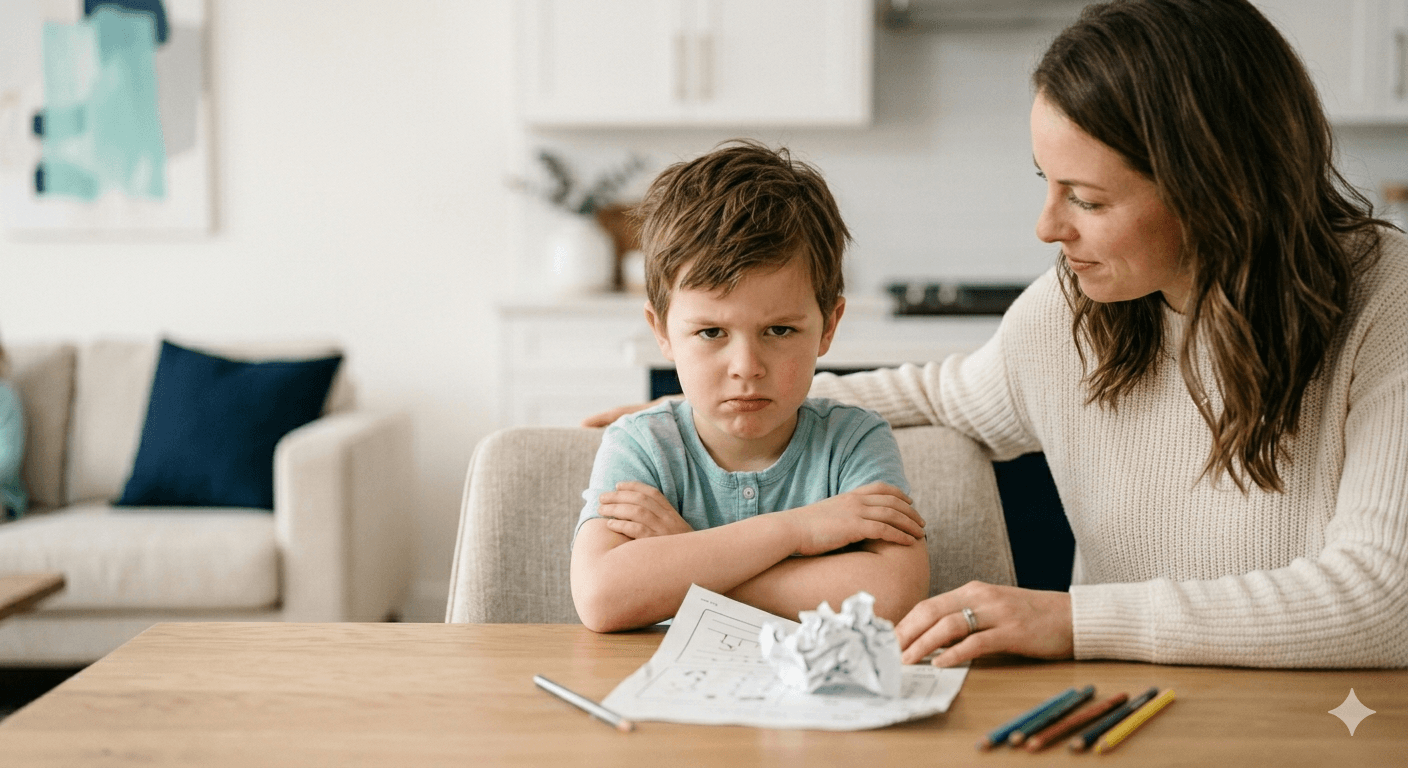
Emotional Signs
Quick, intense flares of frustration that seem out of proportion to the trigger. Low frustration tolerance: small setbacks (a lost game, a broken toy, a "no") tip into a meltdown. Difficulty calming back down once upset, sometimes staying dysregulated for 20-30 minutes or more. Saying things they don't mean in the heat of the moment ("I hate you," "I wish I'd never been born"). Lingering irritability or a "short fuse" that makes the whole house feel like it's walking on eggshells.
Physical and Behavioral Signs
The body shows anger before words can: a clenched jaw, red face, tense fists, stomping, or a racing heart. Younger children may hit, kick, bite, throw objects, or slam doors. Some kids turn it inward: ripping up their own work, hiding, or saying they're "stupid." You may also see displaced anger, where a hard day at school detonates over something trivial at home, because home feels safe enough to fall apart in.
What's Normal vs. What's Worth a Closer Look
Tantrums in toddlers and preschoolers are developmentally expected; the emotional brain is online years before the braking system. Occasional big feelings in older kids are normal too, especially around transitions, tiredness, or hunger. It's worth paying closer attention when outbursts are frequent and intense for the child's age, when they last a long time or are hard to recover from, when anger leads to aggression that hurts people or property, or when it's damaging friendships, school, or family life. tapouts is coaching and skill-building, not clinical care. If anger involves safety concerns (a child hurting themselves or others, talk of self-harm, or sudden severe changes) please consult a pediatrician or licensed mental health professional.
Anger isn't misbehavior to be punished out of a child; it's an unmet need or a missing skill, showing up in the only language the child has yet. When we teach kids to name what they feel and give them a tool to use in the heat of the moment, the outbursts shrink because the child finally has another option.
Dr. Maggie Vaughan
Licensed therapist & Head of Youth Transformation, tapouts
Why Is My Child So Angry? Root Causes
When a calm, loving child suddenly explodes, parents often wonder what they did wrong, or what's wrong with their child. Usually the answer is neither. Anger that feels "too big" almost always comes from a mix of how a child's brain is built, what's happening around them, and what they have (or haven't yet) learned about handling hard feelings. Understanding the why makes it far easier to respond with patience instead of frustration.
A Brain Still Under Construction
A child's emotional brain (especially the amygdala, the brain's alarm system) is highly active from early childhood. But the prefrontal cortex, the region responsible for impulse control, planning, and calming the alarm, doesn't finish developing until the mid-20s. As the Harvard Center on the Developing Child describes it, the "upstairs" thinking brain is still being wired long after the "downstairs" emotional brain is fully online. That gap is why a seven-year-old can know the rule "we don't hit" and still hit when flooded; in that moment, the alarm is winning and the brakes aren't fully installed yet. Anger management isn't about willpower; it's about practicing the skills that strengthen those brakes over time.
Environment and Triggers
Anger rarely comes out of nowhere. Hunger, tiredness, overstimulation, and too much screen time lower a child's threshold dramatically; the same request that's fine at 10am becomes a war at 6pm. Transitions (stopping a fun activity, leaving the house, bedtime) are classic flashpoints because they demand control a young brain doesn't have to spare. Bigger stressors matter too: a new sibling, a move, friendship conflict, academic pressure, or tension at home all raise the baseline so it takes less to tip over. Sensory-sensitive children and those who struggle with change often have a shorter fuse simply because the world feels louder and less predictable to them.
Learned Patterns and Unmet Needs
Children learn how to handle anger largely by watching the adults around them. If big feelings in the home are met with shouting, kids absorb that as the script for conflict. Anger can also become a learned strategy: if a meltdown reliably ends a non-preferred task or produces attention, the brain notes that it worked. And very often, anger is a mask for a softer feeling underneath: anxiety, embarrassment, disappointment, or feeling unheard. A child who can't yet say "I'm scared I'll fail" or "I feel left out" may only have one channel loud enough to get noticed: anger.
Not Sure If Your Child's Anger Needs Support?
Our free 2-minute assessment helps you understand what's driving your child's big emotions and matches them with the right coaching group. No commitment, no pressure.
2 minutes. No commitment.
What Actually Helps: Evidence-Based Approaches
There's good news in the research: anger management is a teachable set of skills, and children get measurably better at it with practice. The most effective approaches don't try to suppress anger or shame kids for feeling it. Instead, they help children recognize anger early, understand the thoughts fueling it, and use concrete tools to come back to calm, over and over, until those tools become automatic.

Co-Regulation: Borrowing Your Calm
Before children can self-regulate, they learn to co-regulate, borrowing a calm adult's nervous system to settle their own. When a child is flooded, the thinking brain is offline, so logic and consequences don't land. What works is a calm voice, a steady presence, and connection before correction: getting down to their level, naming the feeling, and waiting for the storm to pass before problem-solving. Repeated thousands of times, this is how children internalize the ability to calm themselves. The Child Mind Institute and the American Academy of Child & Adolescent Psychiatry both emphasize that a regulated adult is the single most powerful tool for de-escalating a child's anger.
Name It to Tame It: Putting Feelings Into Words
One of the most well-supported tools is also one of the simplest: helping a child label what they feel. In a landmark UCLA study, Lieberman and colleagues (2007) used fMRI to show that the simple act of putting a feeling into words reduces activity in the amygdala, the brain's alarm center, and engages the prefrontal cortex. Dr. Dan Siegel popularized this as "name it to tame it." For kids, that means building an emotional vocabulary beyond "mad" (frustrated, jealous, embarrassed, overwhelmed) and using a feelings scale or thermometer so they can catch anger at a 3 instead of a 10, when there's still time to use a tool.
Reframing the Thoughts Behind the Anger
Anger is often fueled by a hot thought: "That's not fair," "He did it on purpose," "I'm terrible at this." Cognitive-behavioral approaches, among the most researched strategies for childhood emotional struggles, teach children to notice that thought, question it, and try a more balanced one ("Maybe it was an accident," "This is hard, but I can keep trying"). Children practice spotting the gap between a trigger and their reaction, which is exactly where a new choice becomes possible. Over time, kids learn that they can feel angry and still choose what to do next.
Calm-Down Toolkits and Peer Practice (SEL)
Skills only help if they're practiced before the crisis, not invented during it. Effective programs give children a personal calm-down toolkit (slow belly breathing, counting, a quiet space, movement, squeezing a stress ball) and rehearse it when everyone is calm so it's available when anger spikes. Social-emotional learning (SEL) builds this into a structured curriculum of self-awareness, self-management, and relationship skills. The benefit of practicing in a group is huge: kids face real, low-stakes frustrations (losing a game, waiting a turn, hearing "no") with a coach and peers right there, turning abstract advice into lived reps. The landmark Durlak et al. (2011) meta-analysis of 213 SEL programs found that participating children showed improved emotional regulation, behavior, and an 11-percentile-point gain in outcomes.
How tapouts Helps Kids Manage Anger
tapouts turns the evidence-based strategies above (co-regulation, emotion labeling, cognitive reframing, calm-down toolkits, and SEL) into something kids actually look forward to: small, weekly group coaching sessions led by expert coaches. Kids don't just hear about managing anger; they practice it, in real time, with peers who get it.
Practice With Real Triggers, Real Peers
Each group has just 4-6 children matched by age and challenge. In a group, frustration happens naturally (taking turns, losing a game, disagreeing) so kids practice staying calm in the exact moments that trip them up, with a coach guiding them through it. That's far more powerful than rehearsing skills in isolation.
Expert Coaches Who Stay Calm So Kids Can Learn
Every tapouts coach has 20+ years of experience in child development, education, or coaching and is background-checked. They model the regulated, connected presence that helps an angry child come back to calm, and they know when to challenge a child and when to simply support.
A Personal Calm-Down Toolkit
Kids leave with concrete, rehearsed tools (breathing techniques, a feelings thermometer, reframing scripts, a go-to reset move) that they've practiced in the group before they ever need them at home or school. Skills are built when calm so they're available when angry.
Game-Based Learning That Keeps Them Coming Back
The hardest part of teaching anger management is consistency. tapouts uses games, challenges, and a points-and-prizes system so emotional learning feels like play. Kids want to return, and repetition is exactly what wires those self-control circuits over time.
Progress Parents Can See
Parents receive regular updates with the specific skills their child is building and coach observations. Most families notice changes within 4-6 weeks: shorter and less intense outbursts, faster recovery, and more words instead of explosions.
tapouts vs. Traditional Approaches
| Other programs | tapouts | |
|---|---|---|
| Format | 1-on-1 sessions | Small group coaching (4-6 kids) |
| Practicing anger triggers | Discussed in the abstract | Rehearsed live with real peer frustrations |
| Peer learning | No peer interaction | Kids learn calm from and with each other |
| Cost | $150-300 per session | $39 per week ($159/4 weeks) |
| Waitlist | Often 3-6 months | Start within 1-2 weeks |
| Engagement | Can feel formal or like punishment | Game-based sessions kids look forward to |
| Consistency | Weekly, often varies | Same coach, same group, same time every week |
The Research Behind Our Approach
Research
Putting a feeling into words reduces activity in the amygdala, the brain's threat and alarm center, and engages the prefrontal cortex, the neural basis of the "name it to tame it" approach to managing anger.
Lieberman, M. D. et al. (2007). Putting Feelings Into Words. Psychological Science, 18(5), 421-428
Research
Social-emotional learning programs produce significant improvements in emotional regulation, behavior, and attitudes, along with an average 11-percentile-point gain in outcomes for participating children.
Durlak, J. A. et al. (2011). Child Development, 82(1), 405-432
Research
The prefrontal cortex, responsible for impulse control and calming the emotional brain, continues developing into the mid-20s, well after the emotional centers mature, which is why young children need adult co-regulation and explicit skill-building to manage anger.
Center on the Developing Child, Harvard University: Executive Function & Self-Regulation
Research
Among psychosocial approaches for childhood irritability and aggressive behavior, parent-focused skill training and structured behavioral programs have the strongest empirical support for reducing anger outbursts.
American Academy of Child & Adolescent Psychiatry; JAACAP Open review of evidence-based treatments, 2024
What Parents Can Do at Home
Professional coaching accelerates progress, but you are your child's most important teacher of anger management, and the everyday moments at home are where the real learning happens. None of these require being a perfect, never-frustrated parent. They just shift how you respond when the storm hits.
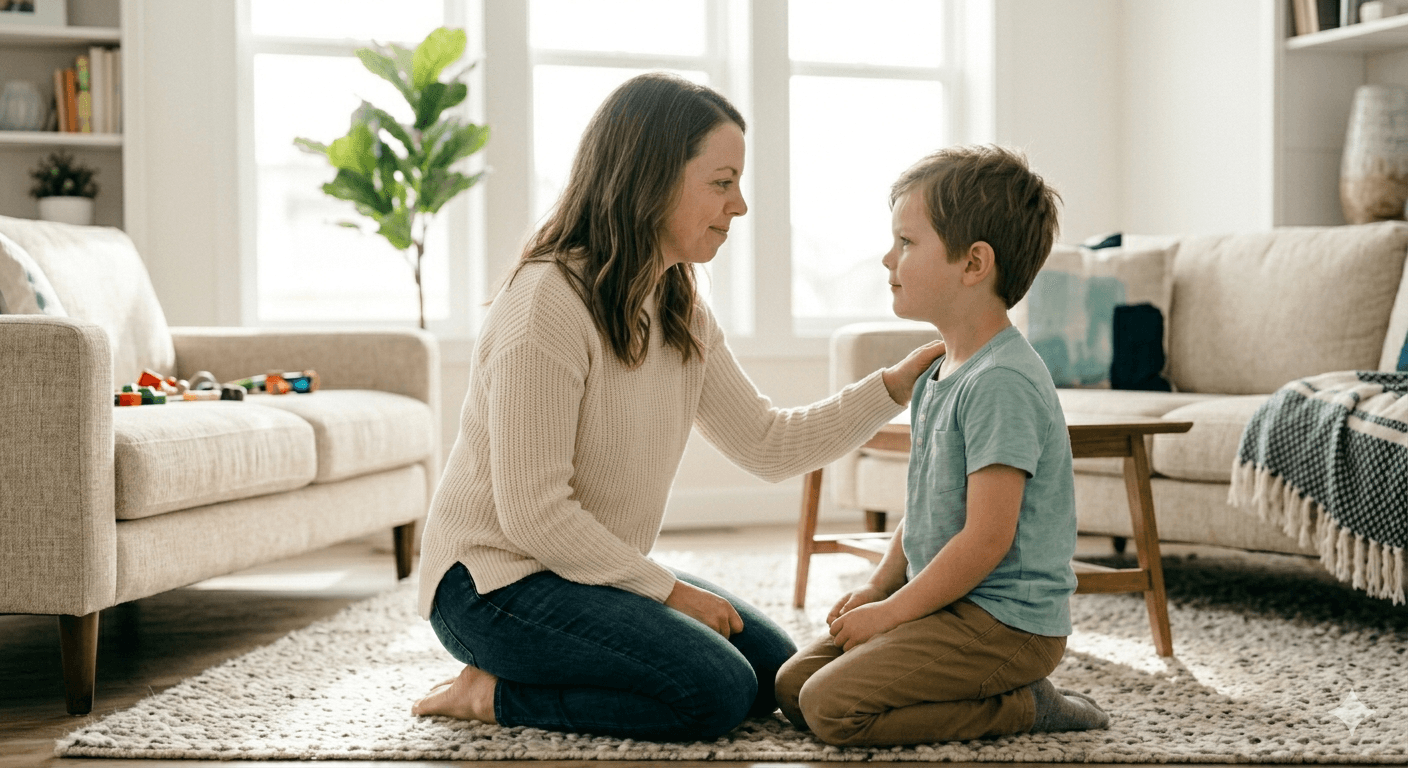
Regulate Yourself First
Anger is contagious, and so is calm. When your child is flooded, your steady nervous system is the tool that helps theirs settle. Take a breath before you respond, lower your voice instead of raising it, and remember that you're co-regulating, not winning an argument. It's completely okay to say, "I need a moment to calm down too," and then model exactly what you want them to learn. A child rarely calms down faster because an adult got louder.
Validate the Feeling, Hold the Limit
You can accept the emotion and still hold the boundary; these aren't in conflict. Try: "You're really angry that screen time is over. That makes sense. And it's still time to turn it off." Validation isn't giving in, and it isn't agreeing that the reaction is okay; it's showing your child that the feeling is allowed even when the behavior isn't. Kids who feel understood escalate less, because they're not also fighting to be heard.
Teach Tools When Everyone Is Calm
Don't try to teach a new coping skill mid-meltdown; the thinking brain is offline. Instead, practice during peaceful moments: name feelings together, build a calm-down corner with comforting items, rehearse belly breathing as a game, and make a simple plan ("When you feel the volcano building, what could we try?"). Then, in the moment, you're just reminding them of a tool they already know rather than introducing one.
Reduce the Fuel and Keep Routines Predictable
Many outbursts are preventable. Protect sleep, keep snacks handy for the hungry-and-cranky window, give warnings before transitions ("five more minutes, then we clean up"), and keep daily routines steady so your child always has a sense of what comes next. After the storm has fully passed, circle back briefly to repair and problem-solve together, "What happened? What could we do differently next time?", so each hard moment becomes a lesson rather than just a loss.
Ready to Help Your Child Stay in Control?
Join 20,000+ families who've helped their kids replace meltdowns with real coping skills through tapouts' science-backed coaching. Your child's first session is free.
2 minutes. No commitment.
What Parents Are Saying
The meltdowns are shorter and less scary
“My son used to rage for half an hour over the smallest things: slamming doors, throwing toys. He's learned to catch the 'volcano' early and use his breathing. The outbursts haven't disappeared, but they're shorter and he comes back to himself so much faster.”

Danielle R.
Parent of 8-year-old • 3 months with tapouts
He finally has words instead of fists
“When my 7-year-old got angry, he'd hit first and melt down after. His coach helped him name what he was feeling and gave him a plan for the heat of the moment. Last week he told me 'I'm really frustrated' instead of throwing his controller. That's everything.”

Marcus T.
Parent of 7-year-old • 2 months with tapouts
From daily blowups to actual calm at home
“Homework time was a battlefield: tears, shouting, doors slamming every single night. The reframing and calm-down tools she learned at tapouts changed our whole evening routine. She still gets frustrated, but now she knows what to do with it, and so do I.”

Priya M.
Parent of 10-year-old • 6 months with tapouts
FAQs
tapouts serves children ages 4 to 16. Groups are carefully matched by age so your child is always with peers at a similar developmental stage. Age groups include 4-6, 7-10, 11-13, and 14-16.
Big feelings and the occasional meltdown are a normal part of growing up; the brain's self-control center isn't fully developed until the mid-20s. Anger is worth a closer look when outbursts are frequent and intense for your child's age, last a long time or are hard to recover from, lead to aggression that hurts people or property, or are damaging friendships, school, or home life. Our free assessment helps you understand where your child falls and whether coaching would help. For safety concerns, please consult a pediatrician or licensed professional.
No. tapouts is coaching and skill-building, not clinical therapy. We teach children practical, evidence-based tools for managing anger and big emotions in a fun group setting, which is highly effective for many kids with mild to moderate struggles. For severe anger, aggression, or any safety-related concern, families should work with a licensed mental health professional. tapouts can be a great complement to clinical care, giving kids extra practice and peer connection between sessions.
Every tapouts coach is a professional with over 20 years of experience in child development, education, or coaching. They're carefully selected, background-checked, and trained specifically in tapouts' evidence-based social-emotional learning curriculum, including how to stay calm and help an upset child regulate.
Sessions are 30 minutes, held weekly at the same time with the same coach and group. Each session includes a check-in, a skill-building activity (often game-based), group practice, and a take-home challenge. Groups have 4-6 children matched by age and challenge area, so kids practice managing real frustration with peers in a safe, supportive setting.
This is one of the most common concerns we hear, and a big reason the group format works. Kids quickly realize they're not the only one who struggles with big feelings, which removes the shame. Our coaches start with low-pressure, game-based activities and never put a child on the spot. Most parents tell us their child was hesitant for the first session and engaged by the third.
tapouts is $39 per week, billed as $159 every four weeks. Your first session is completely free with no obligation to continue. Compared to other programs ($150-300 per session), tapouts provides expert-led support at a fraction of the cost.
Most parents see positive changes within 4-6 weeks. Common early improvements include shorter and less intense outbursts, faster recovery after getting upset, and kids using words and coping tools instead of exploding. Longer-term benefits include stronger emotional regulation, better friendships, and more peace at home.
More ways we help your child
Help Your Child With Worries
Learn how to recognize when your child is struggling with worries, understand the causes, and discover proven strategies that help kids build confidence and manage big emotions. Ages 4-16.
Read more →Social Skills for Kids
Discover why some children struggle socially, what builds lasting friendship skills, and how group coaching helps kids ages 4-16 connect with confidence.
Read more →Building Confidence in Kids
Confidence is earned, not handed out through praise. See what actually builds lasting confidence in kids ages 4 to 16, and how group coaching speeds it up.
Read more →Online Counseling for Kids: A Clear, Honest Guide
Online help for kids works, no waitlist and no commute. Learn how to tell coaching from therapy and find the right support for your child, ages 4 to 16.
Read more →Tantrums vs. Meltdowns
Tantrums and meltdowns look alike but need opposite responses. The real difference, what's happening in your child's brain, and what actually helps. Ages 4-16.
Read more →How to Calm an Angry Child
A step-by-step, science-backed way to calm an angry child in the moment: what to do, what to avoid, and how to help the outbursts shrink over time. Ages 4-16.
Read more →Coaching vs. Therapy for Kids
Coaching and therapy for kids aren't the same, and your child may need one, the other, or both. An honest guide to the difference, when each fits, and how to choose. Ages 4-16.
Read more →Child Behavior Problems
Defiance, power struggles, not listening, meltdowns over daily routines. A calm, science-backed guide to what's really behind child behavior problems and what actually helps. Ages 4-16.
Read more →Negative Thinking in Children
“I'm stupid.” “Nobody likes me.” “I always mess up.” A calm, science-backed guide to negative thinking in children: where it comes from, how to respond in the moment, and the skills that turn the inner critic into an inner coach. Ages 4-16.
Read more →Keep reading
What Is Co-Regulation? And Why Your Child Needs It First
Co-regulation is how kids borrow a calm adult's nervous system before they can calm themselves. What it is, real examples, and how it grows into self-regulation.
Read more →Emotional regulationName it to tame it: meaning, brain science, and scripts by age
“Name it to tame it,” from Dr. Dan Siegel's The Whole-Brain Child, means labeling a feeling to calm it. What the phrase really means, the brain science behind it, and word-for-word scripts for toddlers through teens.
Read more →Emotional regulationEmotional Regulation by Age: What's Realistic at Each Stage
What emotional regulation really looks like from toddlers to teens. A stage-by-stage guide to calibrate your expectations to your child's developing brain.
Read more →Every child deserves to feel confident
Join 20,000+ families helping their kids build emotional strength. Your child's first session is free.
2 minutes. No commitment.